IWSC 2026 Wine results revealed

The IWSC has unveiled the results of its 2026 Wine Judging, following two weeks of rigorous tasting by more than 130 of the UK’s leading wine professionals. Nearly 4,000 wines from 39 countries were assessed, making this one of the competition’s most globally representative editions to date.
The judging panel brought together senior buyers, importers, sommeliers, beverage directors and influential communicators, overseen by the IWSC Wine Judging Committee: Alex Hunt MW, Alistair Cooper MW, Dirceu Vianna Junior MW, Essi Avellan MW, John Hoskins MW, Mick O’Connell MW, Sarah Abbott MW and Victoria Mason MW.
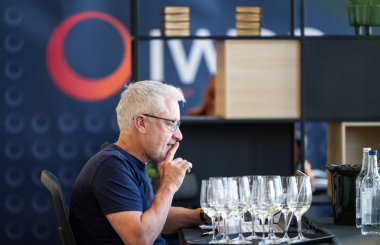
Each wine was tasted blind in panels of three to four judges, with no more than 65 wines assessed per panel per day, to avoid palate fatigue and to allow time for panel discussion. The competition’s rigorous standards were reflected in the medal distribution: only 3% of wines received gold medals, while 28% earned silver and 54% bronze.
Global highlights
- France and Italy once again dominated the medal table, receiving more than 649 and 459 medals respectively, while Spain achieved the highest number of gold medals overall with 21.
- China emerged as one of the standout success stories of the year, collecting seven gold medals, 24 silvers and 43 bronzes, underlining its rapid evolution as an emerging wine region.
- Among the strongest-performing regions overall were South Australia, Marlborough, Veneto, Champagne and Rioja.
- Fortified wines enjoyed a particularly successful year, earning more than 80 medals, including 17 gold medals. Madeira and Port performed strongly, receiving five and eight gold medals respectively.
- English sparkling wine continued its upward trajectory, securing 65 medals, including four gold medals.
Top-scoring wines
Kopke Colheita 1957, Port, Portugal — gold, 98 points“Succulent and suave, with real class.”
Church Road 1 Chardonnay 2022, Hawke’s Bay, New Zealand — gold, 97 points
“Smoky nose, lively citrus and impressive lees weight.”
Kopke Colheita 1967, Port, Portugal — gold, 97 points
"Notes of garam masala, earthiness, class and a lovely balance of weight and freshness."
D’Oliveiras Malvazia 1991, Madeira, Portugal — gold, 97 points
“Beautiful acidity, baked orange, preserved cherries and spice.”
D’Oliveiras Verdelho 1981, Madeira, Portugal — gold, 97 points
"Deep, rich and intense on the nose, with deep dark spices and real class."
Estate Argyros Vinsanto Late Release 2005, Santorini, Greece — gold, 97 points
“Raisins, dark prunes, molasses and a lingering balsamic complexity.”

France: freshness and precision lead the way
France delivered strong performances across all key regions, with a total of 649 medals, including 14 gold. The judges highlighted a growing emphasis on fruit purity, freshness and terroir transparency.
“The wines that stood out were the ones that didn’t try too hard — they let the fruit and terroir shine through,” said Mick O’Connell MW, who oversaw the category.
Burgundy impressed with wines combining drinkability and ageing potential, with Chablis emerging as a major highlight.
“Chablis was the standout across all levels — vibrant, zippy, bone-dry wines that are incredibly on trend,” added Mick O’Connell MW.
Among the standout wines was La Chablisienne Les Preuses Grand Cru 2023, praised for its “ripe citrus, yellow pear and crème fraîche elegance.”
Provence once again dominated the Rosé category with nearly 70 medals awarded, including 3 gold medals. One of the highlights, Artesans Les Secrets Rosé 2025, showed “verbena freshness, peach blossom and noble balance.”
Champagne: elegance over power
Champagne shone once again this year, with nearly 130 medals awarded. Essi Avellan MW praised the category’s stylistic diversity: “We’ve gone through a multitude of styles and found gold-winning examples across them — it’s been a very good showing.”
Vintage Champagne stood out for complexity and maturity. Several vintage expressions received coveted gold medals, with one of them scoring an impressive 96 points – Rare Champagne Brut 2012: “Expressive, reductive nose with great tertiary notes of mocha and roasted coffee.”
Blanc de Noirs also emerged as a major trend. “We’ve tasted more Blanc de Noirs than ever, and I’m very happy with the quality,” said Essi Avellan MW.
Across both vintage and non-vintage categories, judges highlighted fresher, fruit-driven styles, with elegance taking precedence over power.
Spain: Rioja embraces stylistic diversity
Spain achieved the highest number of gold medals overall (21) and a total of 322 awards, with Rioja leading the conversation. Judges highlighted the region’s stylistic breadth, from traditional oak-aged Gran Reservas to fresher, modern expressions.
“We had some gold medal-winning Gran Reservas in that long, oak-aged style, but also really juicy, fresh, modern wines and everything in between,” said John Hoskins MW.
One of the top performing Rioja wines, Hacienda López de Haro Classica Reserva 2016 received 96 points and a gold medal, showing “black forest fruits, graphite, dark chocolate and silky layers.” Another high scorer was J. Garcia Carrion Marqués de Carrión Crianza 2019: “strawberry, tobacco, liquorice and beautifully pure fruit.”
Italy: Veneto shines
Veneto delivered one of the competition’s strongest performances, particularly in Amarone and Valpolicella Ripasso.
“The wines showed true representation of the style that those grapes and region can achieve,” commented IWSC judge & Prestige Sales Account Manager at Berkmann Wine Cellars Vincenzo Arnese.
As many as three gold medals went to Amarone della Valpolicella. One of the standouts was Cantina Valpantena Tesco Finest 2022: “Candied and vibrant, shows good integrity, sweet fruit and great openness, with a rich finish.”
Valpolicella Ripasso added to the medal count with two gold medals awarded to Zeni 1870 Marogne Superiore 2023 and Farina Montecorna 2023.
Southern regions also didn't disappoint, with Sicily performing consistently well and Sardinian wines standing out for their balance and freshness. A Vermentino di Gallura from Sardinia – Siddùra Maìa 2024 captivated our judges who described it as: “fruity, juicy and mineral with some lovely lemony character and almond finish, with good intensity and a salty finish”.
Portugal: fortified wines steal the spotlight
Portugal performed strongly, with nearly 200 medals awarded. In the Portuguese still wine flights, judges observed a clear stylistic shift towards lighter, more fruit-forward expressions with restrained oak, reflecting the global trends.
Madeira and Port scooped the awards this year – with 13 gold medals awarded and many more silver and bronze medals.
Indeed, it was a Port that received the highest score at the IWSC 2026 Wine Judging. The judges awarded Kopke Colheita 1957 a gold medal and 98 points, describing it as having a “succulent and suave palate, with a real class about it.”
Another high scorer was a Madeira. D’Oliveiras, Malvazia 1991 received a gold and 97 points: “the palate is crisp, with notes of toffee but also fresh, with beautiful acidity. There is a lovely ripe core of baked orange and preserved cherries with spices. Seriously smart.”
England: sparkling continues to excel
English sparkling wines continue to be one of the UK’s most exciting and fast-evolving categories. This year’s judging saw five gold medals awarded, alongside numerous silver and bronze medals, reinforcing the category’s strong track record at the IWSC.
Two of the English sparkling gold medal-winners, both scoring 96 points, stood out in particular. Chapel Down Kit’s Coty Blanc de Blancs Brut 2019 was commended for its "bright palate with good intensity" and "baked pastry flavours", while Langham Perpetual Chardonnay 2nd Edition Brut Nature NV showed “bursting with autolytic notes, buttered brioche, bright citrus".
South America: finesse and freshness emerge
South America delivered several standout moments, with judges praising greater finesse and consistency across Chile, Argentina, Brazil and Uruguay.
Alistair Cooper MW, overseeing the category, highlighted Chile’s evolution: “We’re seeing more consistency and a broader range of styles, with more subtlety and fine tannins”.
A gold-winning Maipo expression - Viña Indómita Duette Cabernet Sauvignon-Carménère 2024 exemplified this: “classical stony aromatics with hints of black currant, tea leaf, graphite and violets. The palate is very classical, showing chalky, grippy tannins, a well-integrated acidity leading to a seamless, classy, elegant finish.”
Brazil emerged as an exciting growing region. “Brazil has been on the rise for a decade — the quality across the country is really impressive and very encouraging,” said Alistair Cooper MW.
The judges praised Argentinian flights for their shift towards fresher, lower-alcohol styles. The high-altitude Malbecs were particularly notable. One of the highlights came from Gualtallary. El Enemigo As Bravas Malbec 2018 showed “Opulent aromatics, layered with blueberry and blackberry fruits, blackberry crumble, and a delicate salinity.”
Uruguay also impressed and surprised the judges, who awarded a gold to a standout -Juanico Albariño 2025 by M&S. The wine delivered “varietal typicity, flavour intensity and saline freshness”.

Australia: diversity and regional excellence
Australia reinforced its reputation as one of the world’s most versatile wine-producing nations, earning over 300 medals for a variety of wine styles.
“What I really like is that the strong results are across categories,” said Alex Hunt MW, who oversaw the judging. “There isn’t one grape, one style or one region dominating — it shows Australia has a very strong game across the board.”
Barossa Shiraz once again demonstrated why it remains a benchmark style, showing “very good typicity and solid quality… it’s a classic that will stand the test of time,” noted IWSC judge and Head of Wine at Mount St Restaurant and The Audley, Agnieszka Swiecka.
McLaren Vale also impressed, earning three gold medals for Shiraz. One standout, Black Pig The Prize Shiraz 2023 by Fuse Wine Services, was praised for its “nice balance of dark fruit, rounded acidity and soft tannins.”
A gold-winning Adelaide Hills expression, Shaw and Smith Shiraz 2023, showcased a more elegant side of Australian Shiraz with “dark cherry, red liquorice and a long peppery finish.”
Tasmania emerged as one of the most consistent performers, particularly for wines displaying “great regional typicity,” while Pinot Noir from Yarra Valley and Adelaide Hills impressed judges with structure and finesse.
New Zealand: Chardonnay, Syrah and Sauvignon Blanc
New Zealand delivered another strong performance, with judges highlighting both the consistency of quality and growing stylistic diversity across categories.
Sauvignon Blanc challenged expectations, revealing far more variation and complexity than many anticipated. Ellis Wines’ Head Wine Buyer Megan Clarke noted that alongside classic styles, there were wines showing “a great sense of style and expression.”
One standout was the gold-winning Villa Maria Private Bin Sauvignon Blanc 2025, praised for its “intense nose, peppery freshness and classic vibrant palate.”
Syrah and Pinot Noir were also among the strongest categories. Mission Estate Reserve Syrah 2024 from Hawke’s Bay impressed judges with its “elegant vanilla spice, rounded tannins and long finish.”
The country’s top-scoring wine, however, was a Chardonnay. Church Road 1 Chardonnay 2022 from Hawke’s Bay received 97 points for its “alluring smoky nose, lively citrus fruit and satisfying lees complexity.”
Overall, great results for New Zealand with over 200 medals awarded.
Central & Eastern Europe: Santorini triumph
This year, Croatian whites showed impressive quality and freshness, while Greek Assyrtiko shone with concentration and length.
IWSC Judge & Wine Buyer at Waitrose, Emma Penman, shared: “The Assyrtiko from Santorini lived up to its high expectations. A selection of lovely, diverse styles - all wines showed impressive concentration, definition and length with some incredibly high quality, age-worthy examples.”
Estate Argyros dominated the category with three gold medals, including the 97-point Vinsanto Late Release 2005, praised for its “molasses, chocolate and lingering balsamic complexity.”
Hungarian sweet wines also excelled, with The Royal Tokaji Wine Company Betsek First Growth 6 Puttonyos 2017 earning 96 points for its “golden richness and concentration.”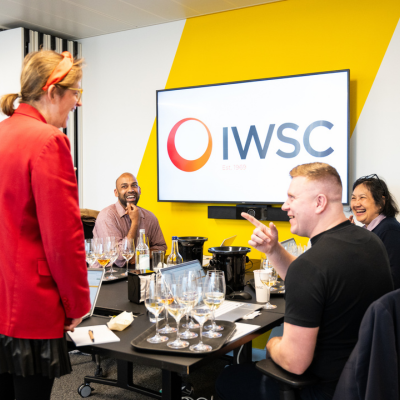
Asia: China’s breakthrough year
China emerged as one of the competition’s notable successes, securing seven gold medals and 74 medals overall.
IWSC judge and Founder of Diogenes The Dog, Sunny Hodge described the wines as “consistently impressive,” highlighting their balance and technical precision, while Director and Wine Buyer at Good Wine, Good People, Dan Belmont added that Bordeaux-style blends are now showing the potential to rival their Old World counterparts
China's signature grape, Marselan, also performed strongly. One standout was He Marselan 2022 by Ningxia Helan Mountain Renyi Yuan Winery, commended for its “elegant nose and fresh palate.”
View all IWSC 2026 Wine results here.
The IWSC Wine Judging Committee will now re-taste all gold medal-winning wines to determine the 2026 trophy winners, which will be announced in September.
Further results from upcoming Global Wine Judgings in Conegliano Valdobbiadene, Turkey, South Africa, Austria, Margaret River and Franciacorta will be revealed in the coming months.
Keep up-to-date
Subscribe to receive email updates from IWSC, including newsletters, information about competitions, events, deadlines and awards.